The Backyard Book

Ten small lives in your backyard

Look at the painting. Read a few short lines. Then go outside and find the real thing.

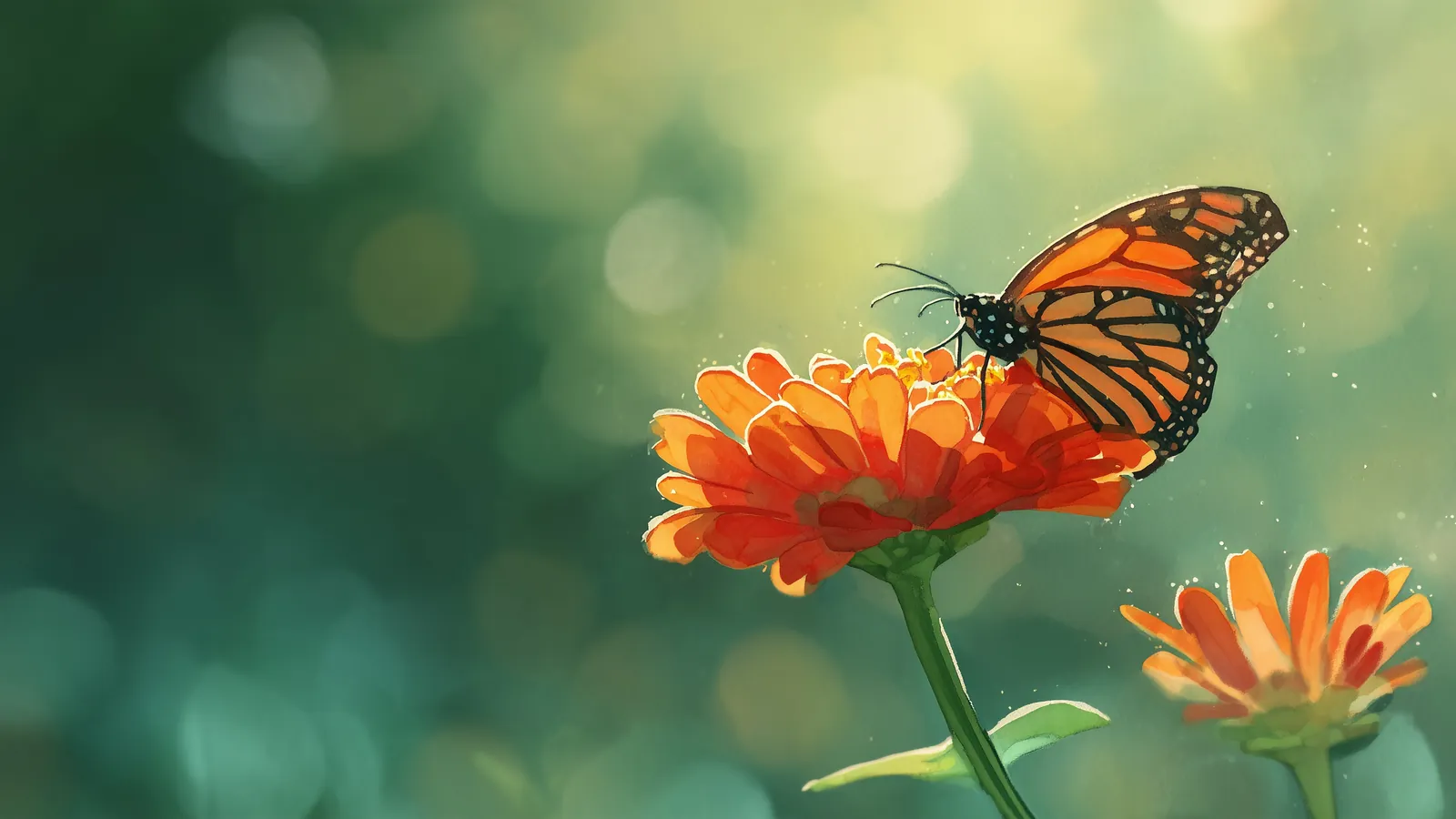
A painting of a monarch butterfly on an orange flower
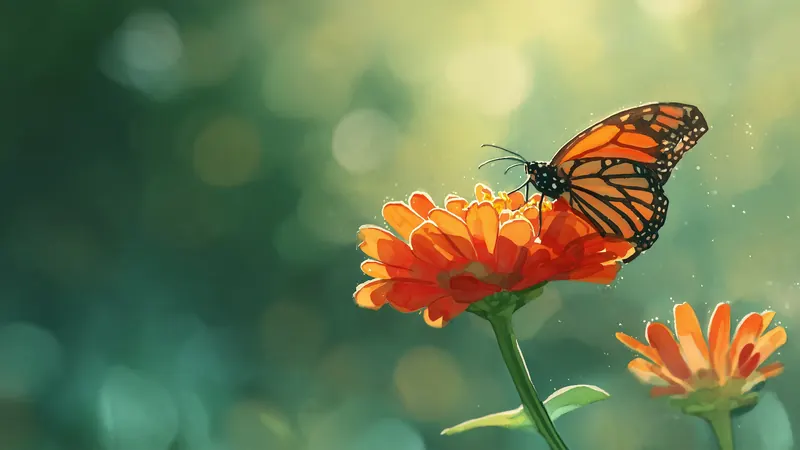
A painting of monarch butterfly

1

Monarch Butterfly

Where do they go?

Every fall, monarchs fly south. Some travel more than two thousand miles. They end up in the mountains of Mexico.

No single butterfly makes the whole round trip. Spring comes and the next generation flies north. Then the next. Then the next.

How do they know the way? Nobody has the full answer yet.

Try it. Sit near flowers for five quiet minutes. Count every visitor. Write down what each one did.
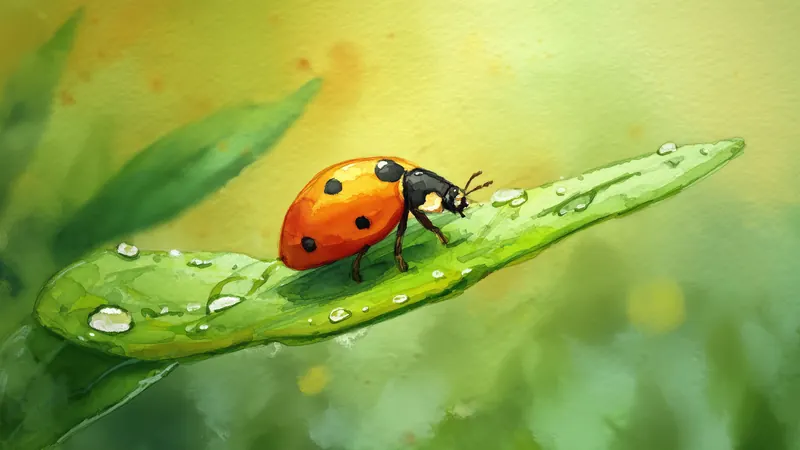
A painting of ladybug

2

Ladybug

Who is on the leaf?

A ladybug is a beetle. Look at the hard red covering on its back. Underneath are the wings it uses to fly.

Ladybugs eat aphids. Aphids are tiny soft bugs that suck the juice from plants. One ladybug can eat dozens in a day.

The spots do not tell its age. That is an old story. The spots help tell which kind of ladybug it is.

Try it. Find a plant with a crowd of tiny green bugs. Look for a ladybug nearby. Come back tomorrow and look again.
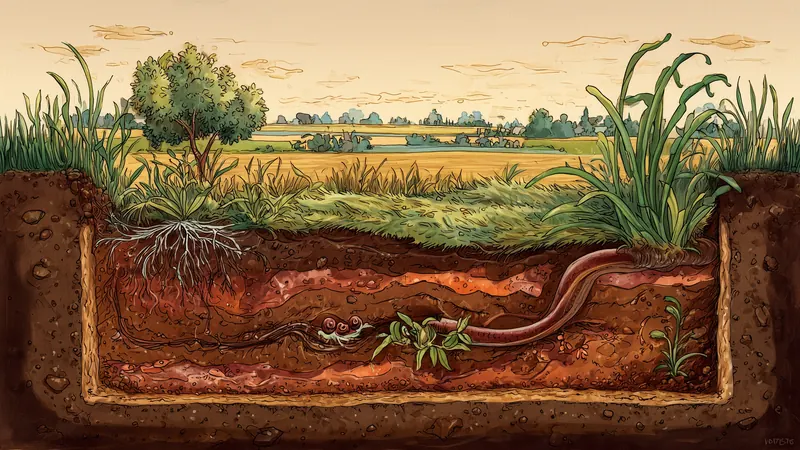
A painting of earthworm

3

Earthworm

What is under the grass?

A worm has no eyes and no lungs. It feels light with its skin. It breathes through its skin too.

As it moves, a worm digs tunnels. Air and water follow the tunnels down to the roots. That helps the plants grow.

After a heavy rain, worms come up. Their tunnels fill with water.

Try it. After a rain, look for worms on the sidewalk. Wet your hands first. Move one to the soil. Gentle hands only.
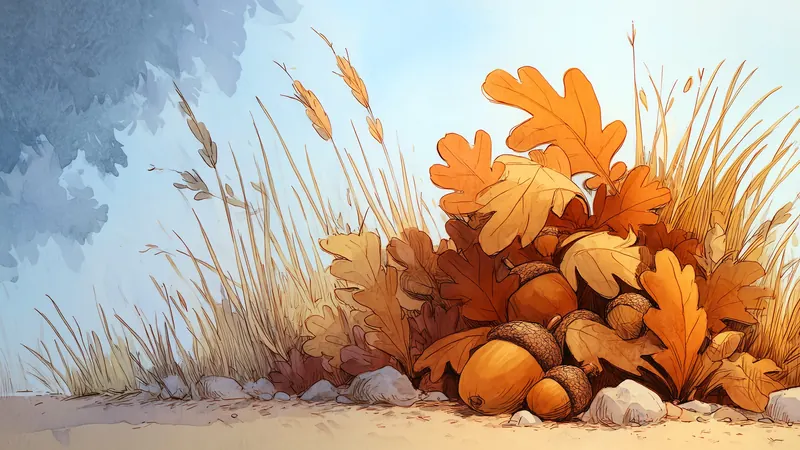
A painting of oak leaves and acorns

4

Oak Leaves and Acorns

What is in the pile?

Every acorn could become an oak tree. Almost none do. Animals eat most of them.

Squirrels bury acorns for winter. They forget some. Those forgotten acorns sometimes sprout.

Pick up a leaf and look at the lines. Those are veins. They carry water in and food out.

Try it. Gather five different leaves. Sort them any way you like. Then ask a friend to guess your rule.
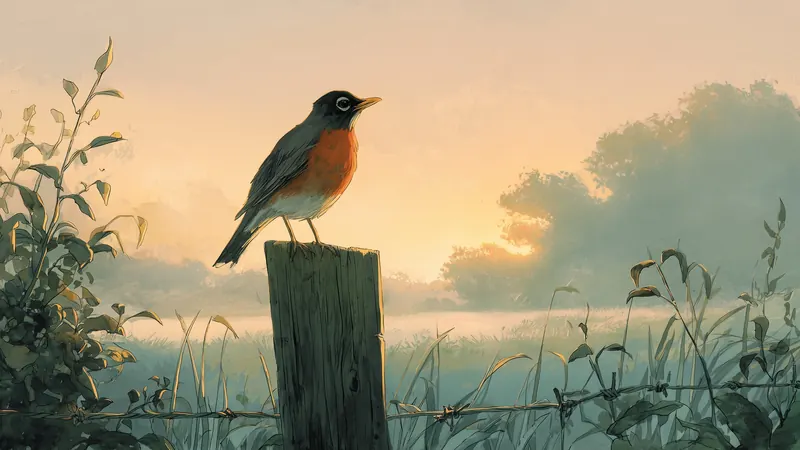
A painting of robin

5

Robin

What is it listening for?

A robin hops, stops and tilts its head. It is looking and listening for a worm in the soil.

Robins often sing before the sun comes up. A robin's eggs are a soft blue. People named a color after them.

Birds are easiest to notice when you sit still.

Try it. Go out at first light. Sit still for five minutes. Count how many different bird sounds you hear.
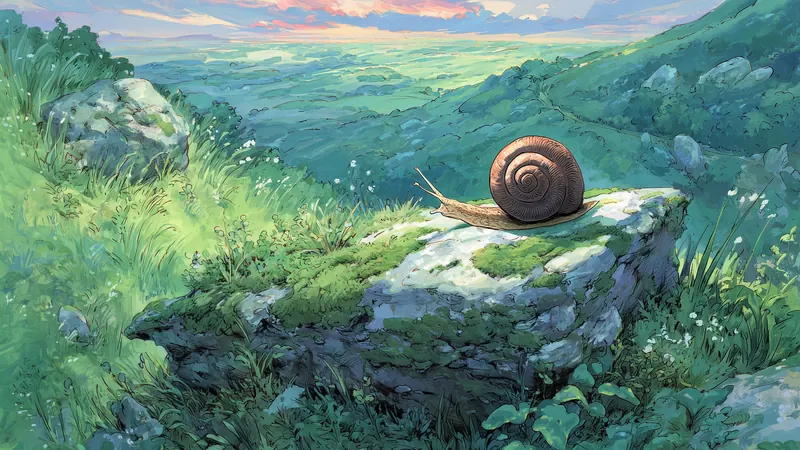
A painting of garden snail

6

Garden Snail

How does it move?

A snail glides on one muscular foot. It leaves a trail of slime. The slime helps it slide over rough ground.

The shell is the snail's home. It grows as the snail grows. Never pull on a shell.

Snails come out when it is damp. Sun dries them out.

Try it. Let a snail crawl onto a clear plate. Look from underneath. Watch the foot ripple. Then put it back where you found it.
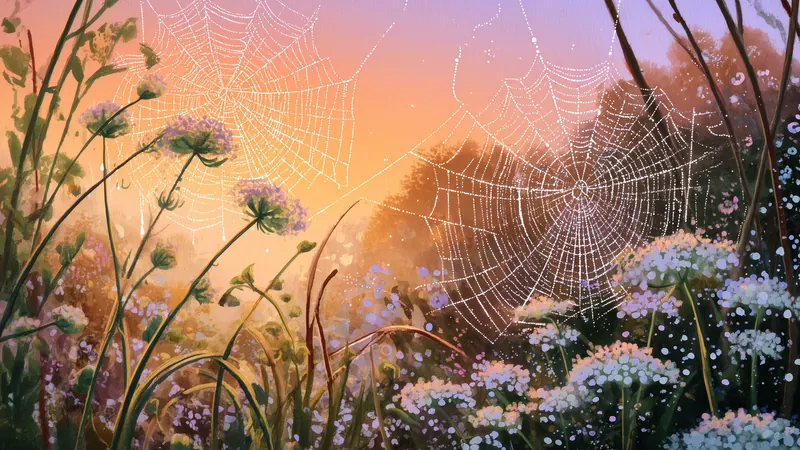
A painting of spider web

7

Spider Web

Why can you see it this morning?

A spider makes silk inside its own body. It pulls the silk out and spins a web.

Spider silk is very thin and very strong. You almost never notice a web. Then dew settles on it. Every thread shines.

Not every web looks the same. Some are round like a wheel. Some are tangled. Some are shaped like a funnel.

Try it. On a dewy morning, find a web. Do not touch it. Draw what you see. Count the spokes if you can.
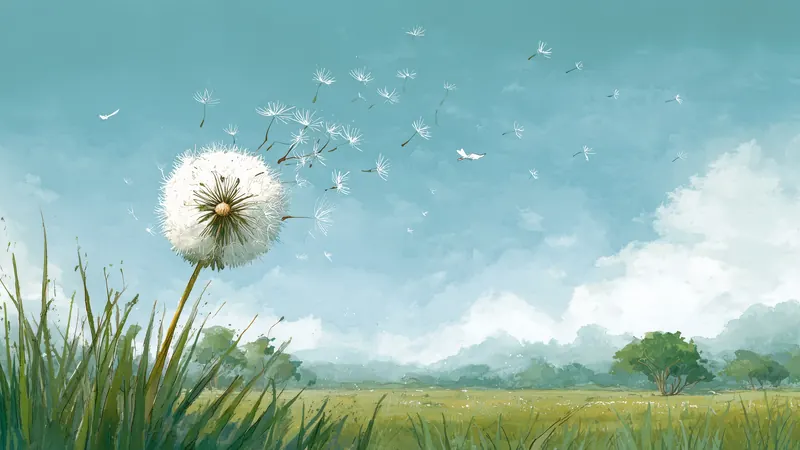
A painting of dandelion

8

Dandelion

Is it one flower?

A dandelion looks like one flower. It is really a crowd of tiny flowers packed close together.

Each tiny flower can become one seed. Each seed has its own little parachute.

The wind carries the seeds away. Where one lands, a new plant can start.

Try it. Find a dandelion gone to seed. Blow on it. Count how many seeds fly. Follow one with your eyes.
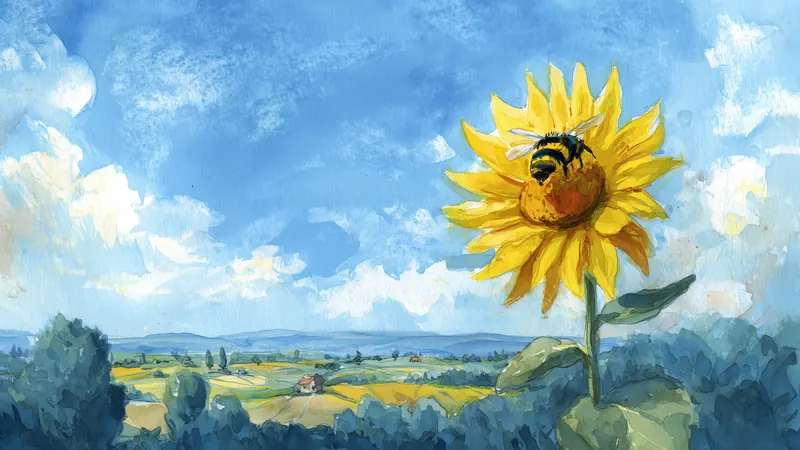
A painting of sunflower and honeybee

9

Sunflower and Honeybee

What is that big yellow thing?

A sunflower is not one flower. The middle holds hundreds of tiny flowers packed together. Each one can become a seed.

Look at the seeds. They form spirals that curl two ways at once.

A bee visits the tiny flowers and picks up pollen. When it visits the next flower, some pollen drops off. That is how seeds begin.

Try it. Find a sunflower. Look at the middle with a magnifier. Trace one spiral with your finger.
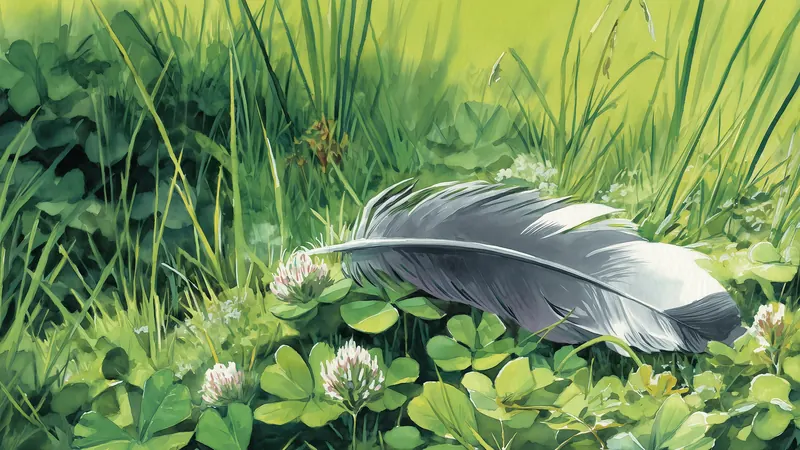
A painting of feather

10

Feather

Why does it stay together?

A feather looks like one flat piece. Look closer. It is made of thin branches called barbs.

The barbs hook together with tiny hooks you can hardly see. Pull them apart and they stay apart. Stroke them back and they zip together again.

Birds fix their feathers with their beaks. People call it preening.

Try it. Find a feather. Gently pull the barbs apart. Stroke them back together. Wash your hands afterward.

Your Backyard Card

Check a box each time you find the real thing. No hurry. Some take a whole season.