An age of the Earth
The Triassic
The name comes from a Greek word for three.
About 252 to 201 million years ago
Look and listen
- Triassic50 million years
- Jurassic58 million years
- Cretaceous77 million years
- Since then66 million years
The tiny gold line at the end is all of human time, about 300,000 years.
- When
- About 252 to 201 million years ago
- How long
- About 50 million years
- The land
- One giant continent called Pangaea
- The plants
- Ferns, cycads and cone trees. No flowers yet
Read along
Three things to know
- The land was one giant piece.
- It was hot and dry.
- Dinosaurs were just beginning.
Read on your own
Welcome to the Triassic
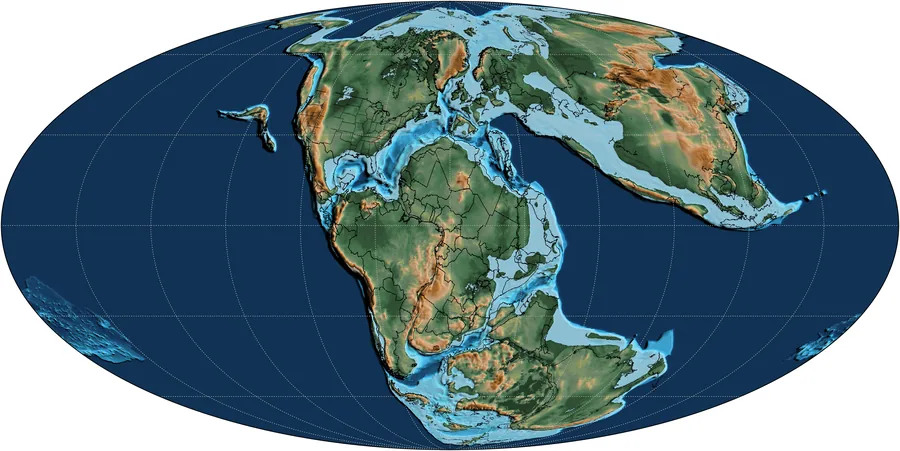
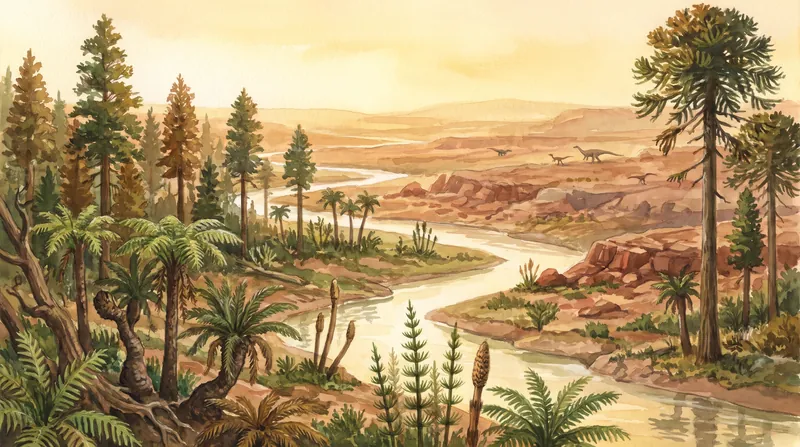
Picture one giant land in the middle of the world. It is called Pangaea. You could walk from one end to the other and never cross an ocean.
Much of this land was hot and dry. Deserts spread across the middle. Near the coasts, strong seasonal rains called monsoons came and went. Rivers wound through green lowlands where tall trees grew.
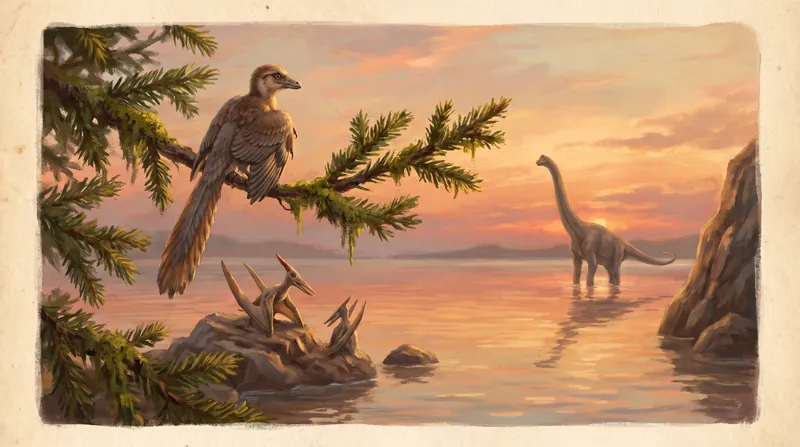
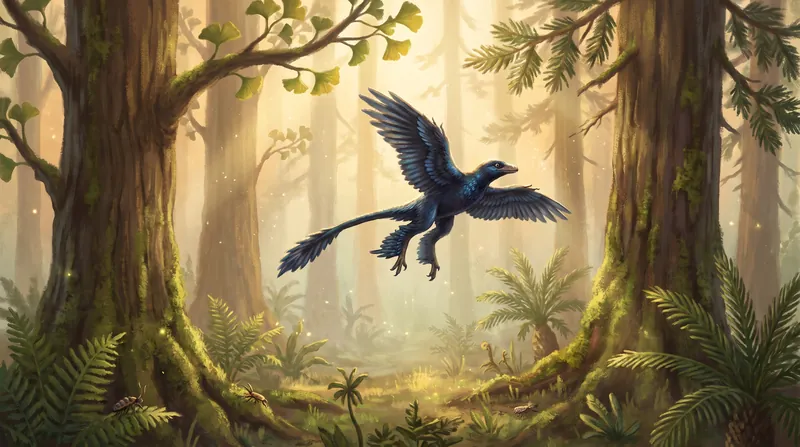
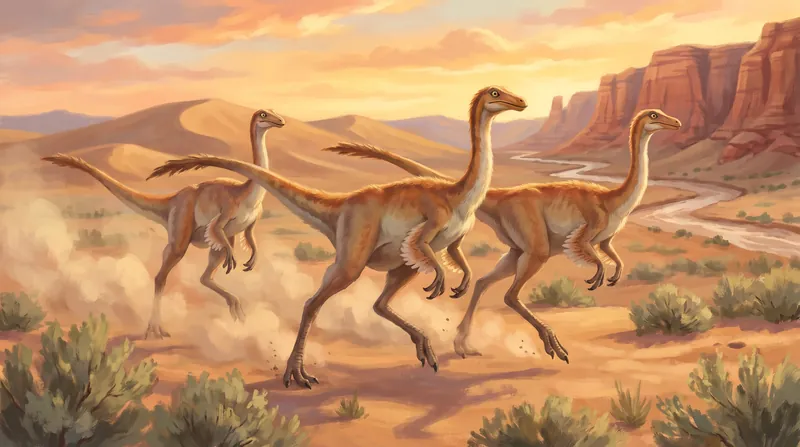
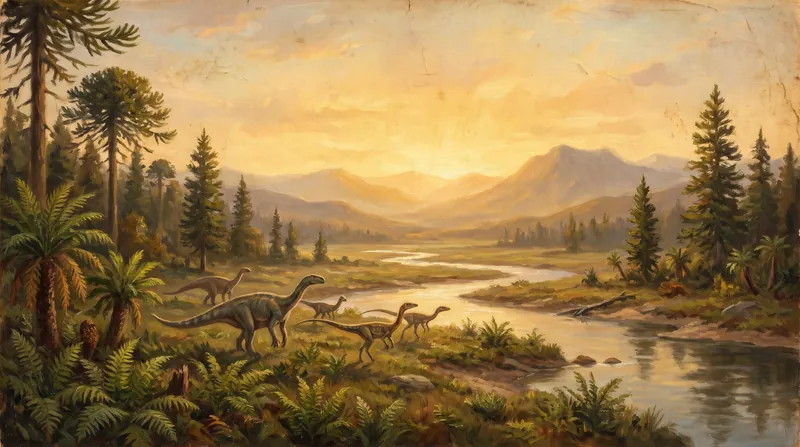
This was the dawn of a new age of life. The first dinosaurs appeared here. They were small and quick. The first mammals appeared too. They were small as well. Nobody yet knew that dinosaurs would one day rule the world.
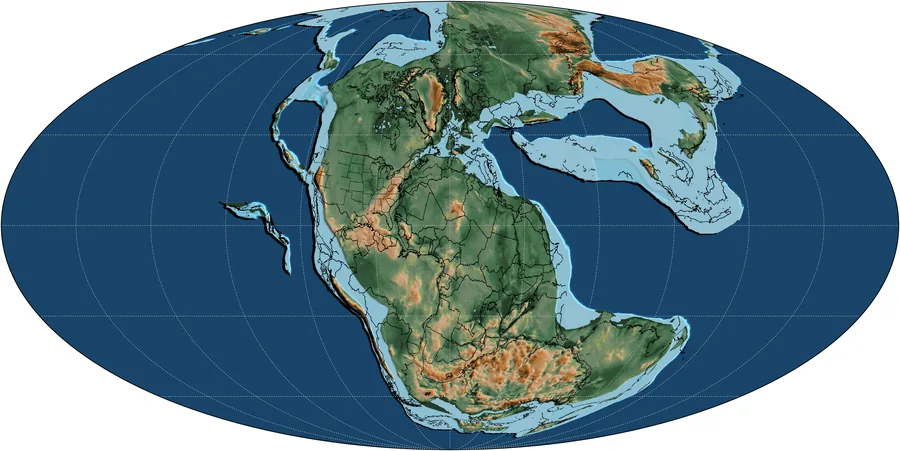 PANGAEAPANTHALASSA OCEANTETHYS SEA
The world then
At the start of the Triassic, almost all the land on Earth was joined together as the supercontinent Pangaea. One huge ocean, called Panthalassa, covered the rest of the globe. Scientists think the clash between the giant land and the giant ocean caused strong monsoons. The middle of Pangaea was much drier than the coasts and had big swings in temperature. Most of the Triassic was hot and dry, but there were some wetter times. The polar lands were mild and had no ice sheets. Scientists do not agree on exactly when Pangaea began to crack apart. Some say in the Middle Triassic and some say near the end.
You can visit Triassic rocks today. In Petrified Forest National Park in Arizona, the rocks come from a place that was once near the equator, about where Costa Rica is now. A huge river system flowed there. Ghost Ranch in New Mexico holds the bones of the small dinosaur Coelophysis. Ischigualasto in Argentina holds some of the oldest dinosaurs known. Monte San Giorgio on the border of Italy and Switzerland holds sea reptiles from an old lagoon.
What grew
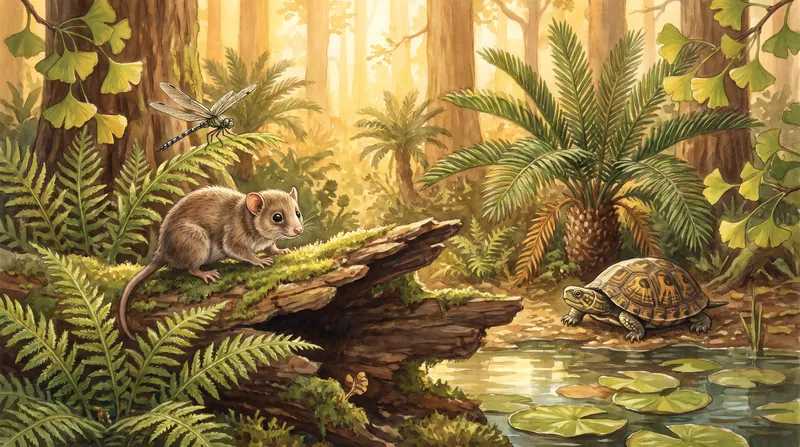
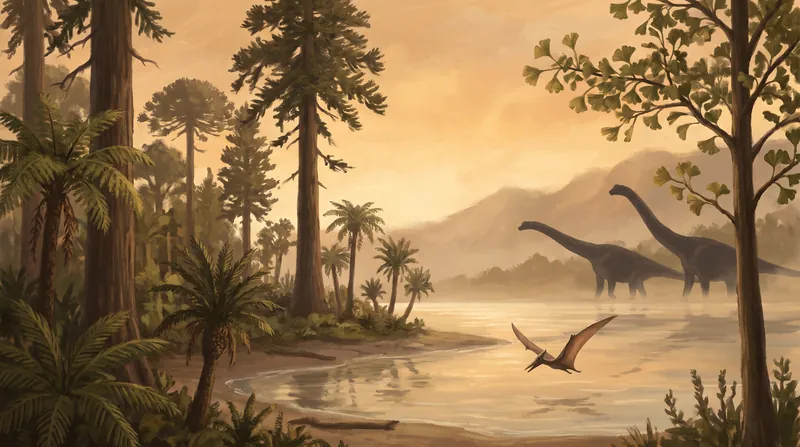
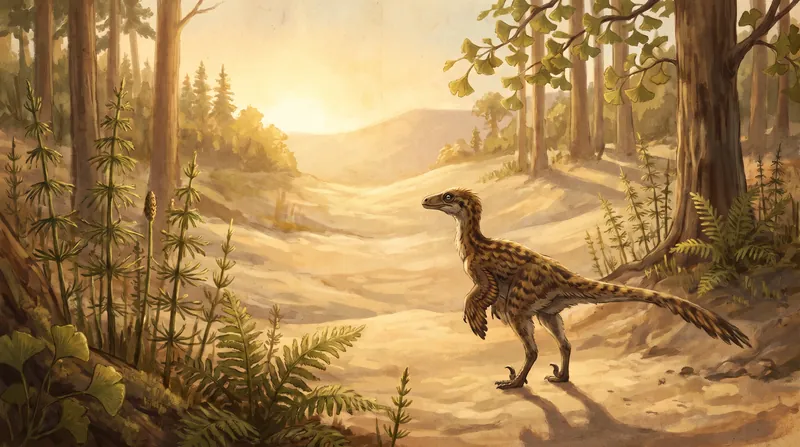
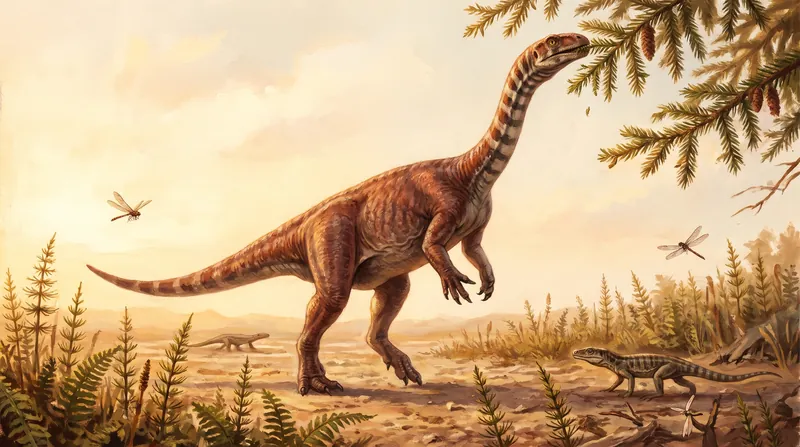
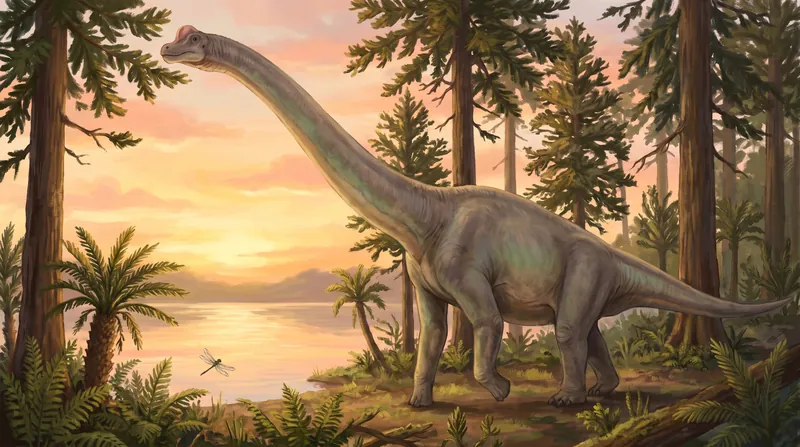
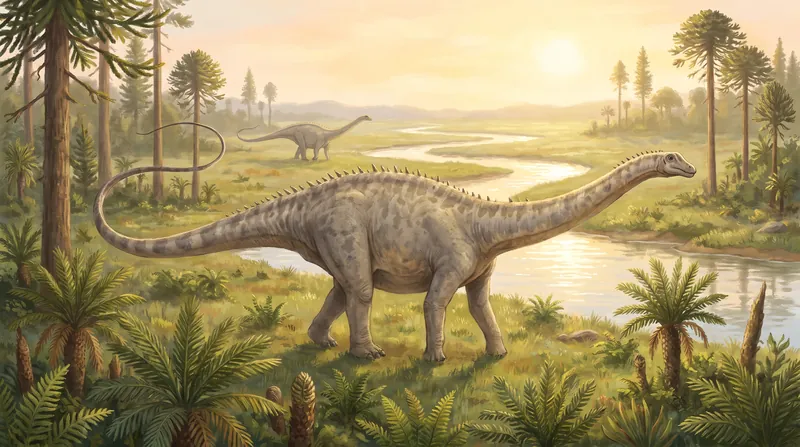
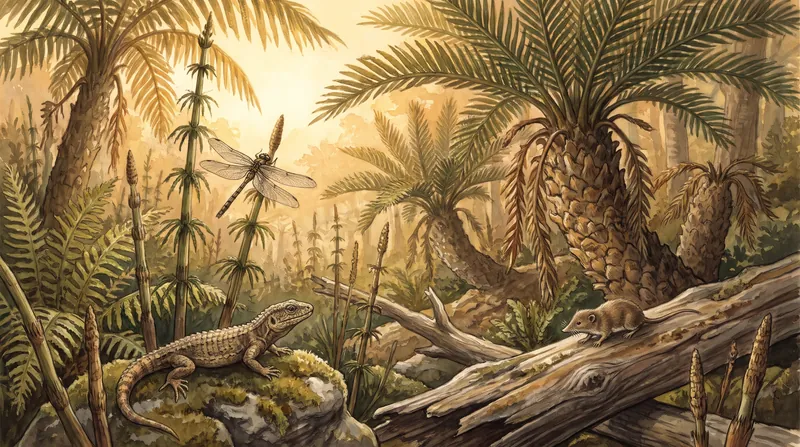
Triassic forests did not look like forests today. They were made of conifers, ferns, cycads, ginkgoes and horsetails. In the south, a seed fern called Dicroidium was very common. Some trees were very tall. At Petrified Forest, conifers rose almost 200 feet in the drier places. There were no flowers yet. There were no grass lawns. There were no bees either. Bees did not arrive until the Cretaceous. So the Triassic world had green and brown plants, but almost no bright colors.
- HorsetailsPlants with jointed stems. Some grew giant in the wet places along rivers.
- FernsLeafy plants that grew in the wet places and some in dry, open ground.
- ConifersCone-bearing trees. They were common, and some grew almost 200 feet tall.
- CycadsTough plants with a thick trunk and a crown of long leaves.
- GinkgoesTrees with fan-shaped leaves. They became more varied late in the Triassic.
- DicroidiumA seed fern that filled many forests in the southern lands.
Who else lived here
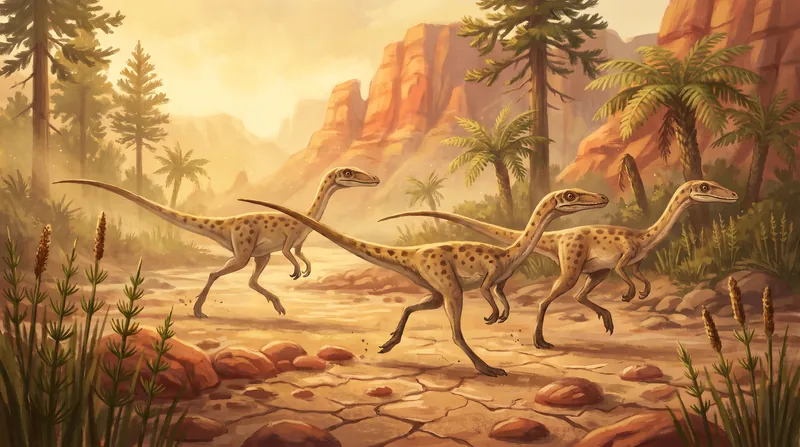
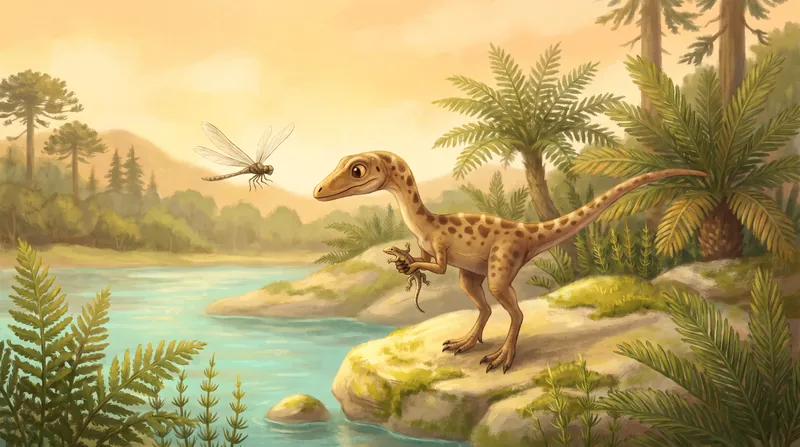
- CoelophysisA slim dinosaur about 10 feet long. Hundreds of skeletons have been dug up at Ghost Ranch.
- Eoraptor and HerrerasaurusTwo of the oldest dinosaurs known. Their bones come from Argentina.
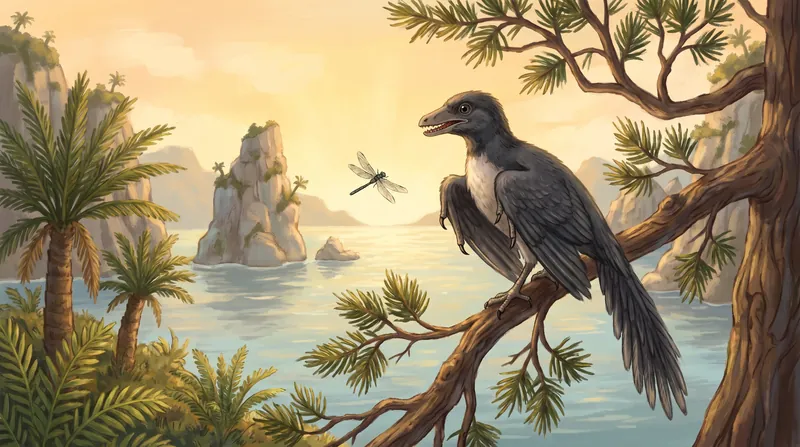
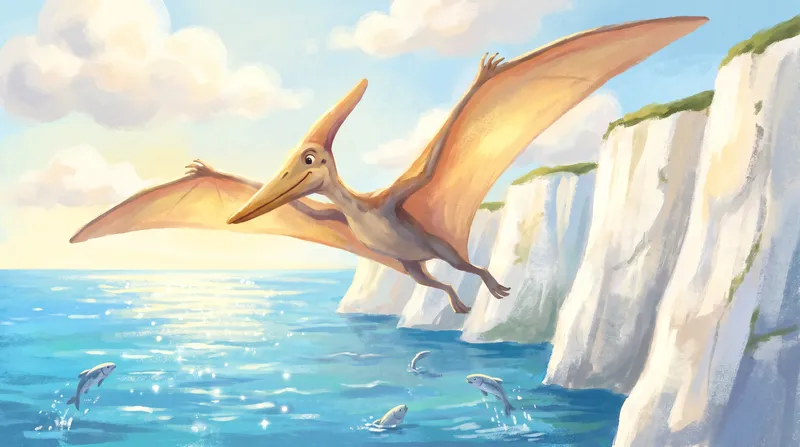
- Early pterosaursFlying reptiles with long tails. They appeared in the Late Triassic and spread across the world.
- ProganochelysOne of the earliest turtles. It lived late in the Triassic.
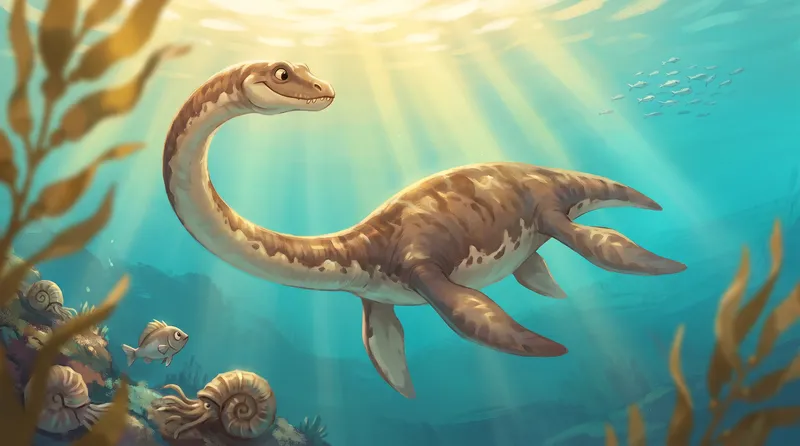
- IchthyosaursSea reptiles. Some grew very large by the Middle Triassic.
- First mammalsSmall animals that came from a group called cynodonts. They first appeared in the Late Triassic.
- PhytosaursBig reptiles of the rivers. They are the most common fossils at Petrified Forest.
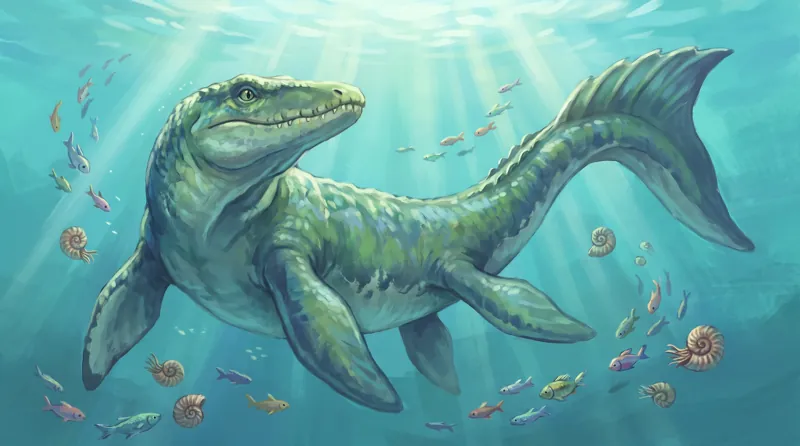
- AmmonitesSea animals with coiled shells. They are relatives of squid and octopus.
Meet them in this book
How it began
The Triassic began after a huge die-off at the end of the age before it, called the Permian. Life had to start over. Over millions of years, new kinds of plants, sea animals and land animals spread into the empty places.
How it ended
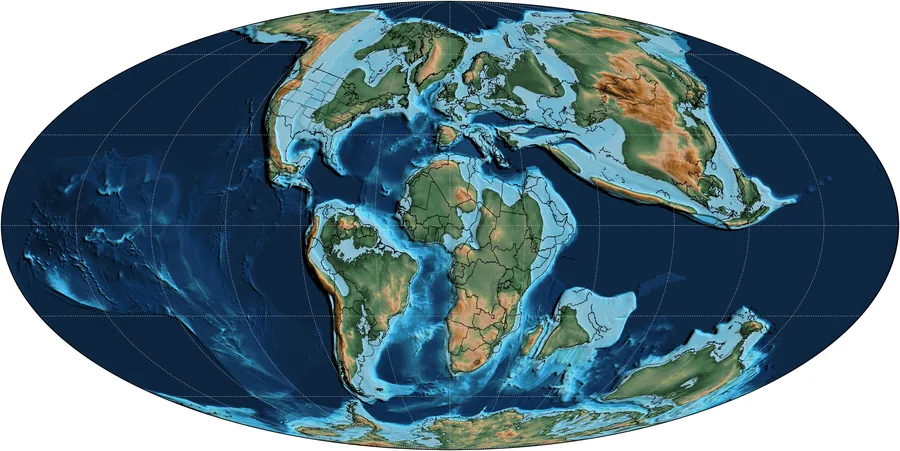
The Triassic ended about 201 million years ago. This is called the end-Triassic extinction. Scientists link it to huge volcanic eruptions in a place called the Central Atlantic Magmatic Province. This happened as Pangaea began to split. Lava poured out for a long time and the air and oceans changed. About one in five families of sea animals vanished.
On land, many large reptiles that had been rivals of the dinosaurs died out. Phytosaurs and aetosaurs were among them. Only small crocodile relatives made it through. Dinosaurs lived on and had more room to grow. In the next age, the Jurassic, they became the great animals of the land.
Marvelous things
- The Triassic lasted about 50 million years. Our own kind, Homo sapiens, has lived for about 300,000 years. The Triassic was about 170 times longer.
- The rocks at Petrified Forest in Arizona come from a place that was near the equator, about where Costa Rica is now. Its river system was larger than any river system on Earth today.
- Hundreds of skeletons of Coelophysis have been found at Ghost Ranch in New Mexico. Scientists still wonder why so many were buried together.
- The first dinosaurs and the first mammals both appeared in the Triassic. They shared the same world.
Words to know
- Pangaea
- The giant supercontinent, one huge land made of all the continents joined together.
- Panthalassa
- The giant ocean that covered the rest of the world.
- extinction
- When a kind of living thing dies out and none are left.