Science Fenns K-5Grades K to 5
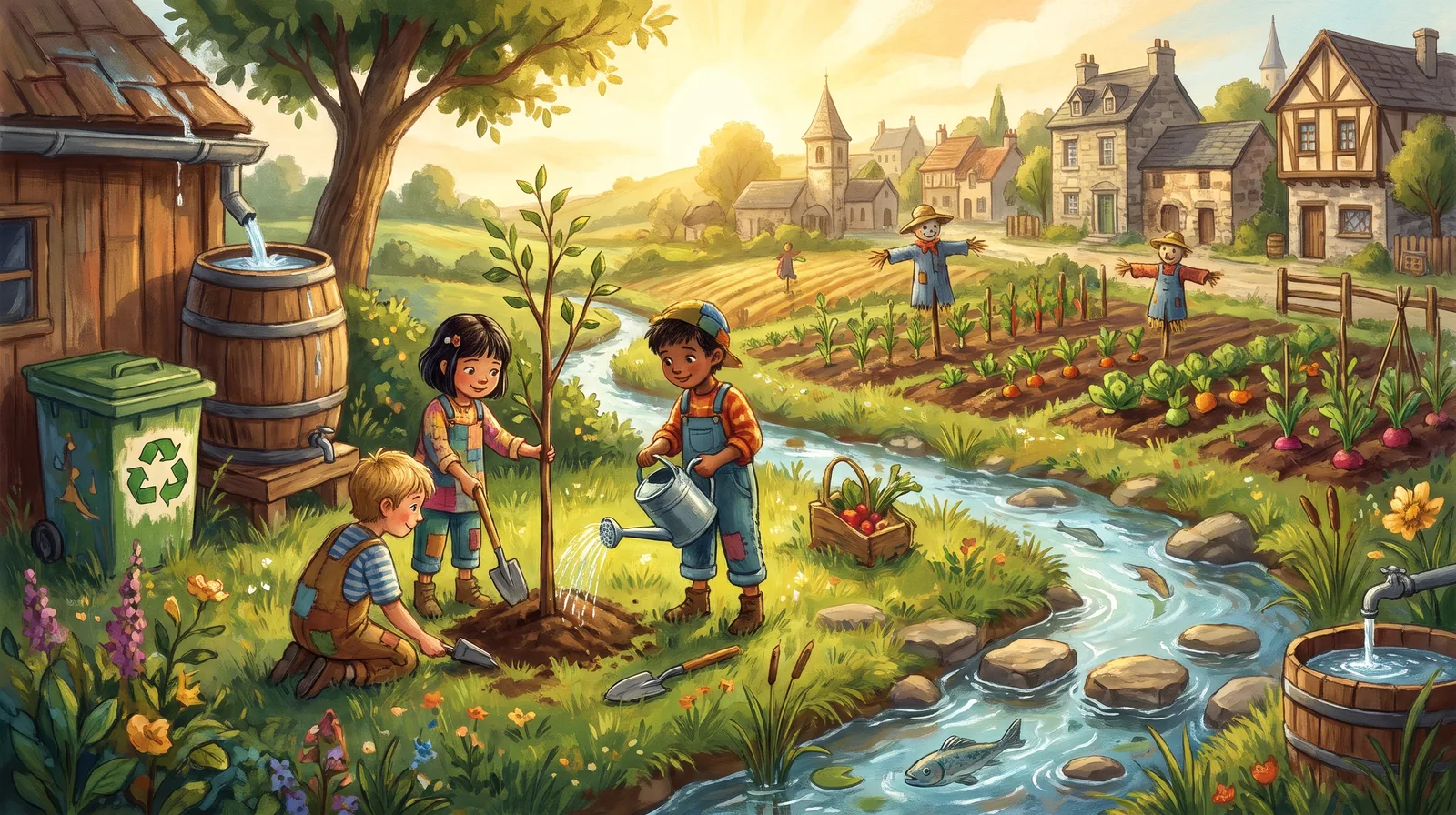
A classroom table covered with sketches of a rain barrel, a recycling bin and a faucet timer for a school plan.

Science / All lessons / Using Resources Wisely

Design a Conservation Plan

Make a plan. Test it. Judge it.

Lesson 33 of 41

Try this first

Before we start

Today’s story

Design a Conservation Plan

Conserve means to use less and waste less. People make plans to save water, energy and materials. A good plan has a goal, steps and a way to check if it works.

Start with a problem. A farm is losing water to evaporation from open ditches. A school leaves its lights on at night. Write the goal clearly. Then brainstorm ideas, pick one and build a model or try a small test.

Last, judge the design. Did it work? What would improve it? Engineers go around the loop many times. Here are the steps.

See it

Five steps. Every time.

    Hands on

    Water Saver Test

    30 minutes plus a few days · Do this with a grown-up nearby

    You need

    • two buckets or jugs
    • a measuring cup
    • a drip tray
    • a small bottle with a pinhole
    • notebook
    • a timer

    Do this

    1. Poke a pinhole near the bottom of the bottle to model a drip.
    2. Place it over a bucket for one hour.
    3. Measure the water in the bucket.
    4. Design a fix, like a smaller hole or a catch tray for reuse.
    5. Repeat with your fix.
    6. Compare the totals.
    Write or draw: A table with before and after amounts, and a short note on which design saved more.

    Watch for: Water adds up even with a small leak. A fix that reuses the water can still help.

    Safety: Work on a tray, wipe up spills and keep the water for plants.

    Same every time

    Three rules

    Rule 1A plan needs a goal you can measure.

    Numbers show if it worked.

    Rule 2Test before you build big.

    A small test saves money and time.

    Rule 3Judge honestly.

    A design that fails still teaches you something.

    Grandpa Fenn’s notebook

    Say it like a scientist

    conserve
    To use less of something so it lasts longer.
    design
    A plan for building something to solve a problem.
    prototype
    A first model of a design used for testing.
    evaluate
    To judge how well something works.

    Poppy’s quiz

    Six questions

    Tap an answer. Green means right. You will see why.

    Talk about it

    Say it out loud

    • What evidence would show that your plan really reduced waste?
    • Where do you see waste at school or on a ranch? What one change would you try?
    Did you know

    A faucet that drips once a second can waste thousands of gallons in a year.

    Someone who does this

    An engineer designs systems that use water and power wisely.