Lesson
The Puddle That Vanished
Toby drew a chalk ring around a puddle. By afternoon, the puddle was gone.
Lesson
Toby drew a chalk ring around a puddle. By afternoon, the puddle was gone.
It rained in the night. In the morning there was a puddle on the driveway.
Toby drew a chalk ring around the edge of it. Then he went to school.
When he got home, the ring was still there. The puddle was not.
There was no drain. There was no hole. Just a dry patch of driveway inside a chalk ring.
Flicker sniffed the dry spot. Then he sneezed.
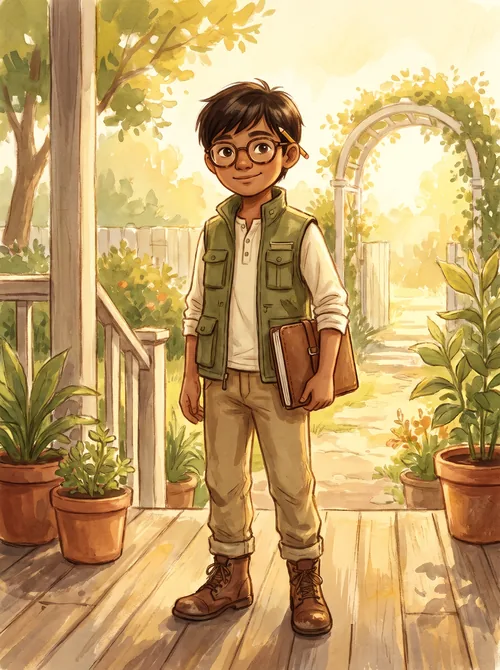 Toby, the noticer
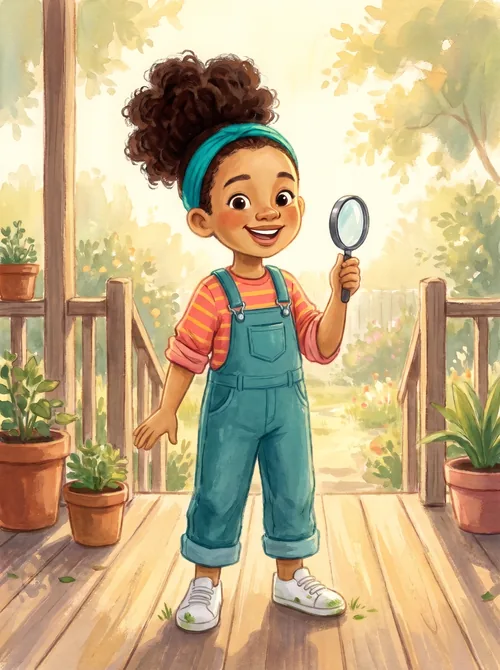 Poppy, the tryer
A driveway can soak up some water. So Poppy used dishes instead.
You can try it too. You need two matching dishes, a spoon and some water.
No sun today? A warm spot and a cool spot work too.
Poppy ran her first test in a hurry.
She put a wide plate in the shade. She put a tall, narrow cup in the sun. Both had the same amount of water.
By afternoon the plate was dry. The cup was still half full.
The shade had beaten the Sun. That made no sense.
She laughed. Then she found two matching saucers and tried again.
That is the oops. She had changed two things. The place and the dish. A good test changes one thing only. Everything else stays the same.
Here is what the Fenns worked out.
Water is made of pieces too small to see. In a puddle they slide past each other. Some of the ones at the top get enough energy to jump out into the air.
Once they jump, they are not liquid water anymore. They are a gas called water vapor. You cannot see it. It mixes into the air.
Heat gives the pieces more energy. So warm water loses them faster. Wind carries the jumpers away, so more can jump. A wide dish has more water at the top, so more can jump at once.
Put a lid on the dish and the jumpers bounce back. Look for tiny drops under the lid.
The water did not vanish. It went into the air.
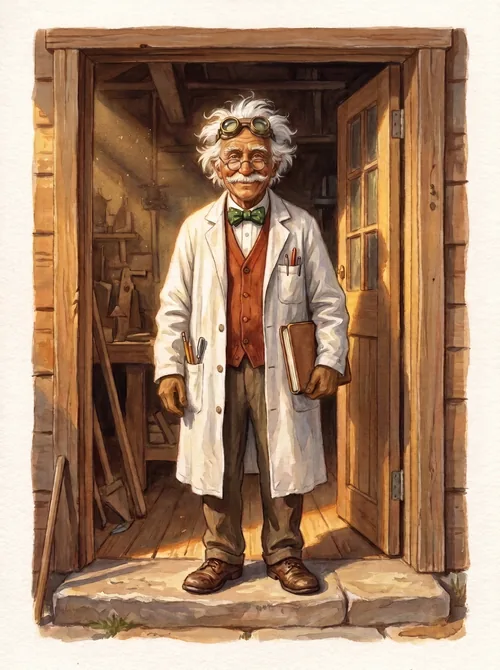 Grandpa Fenn
Water does not vanish. It leaves as a gas you cannot see.
Warm, windy and wide dries fastest.
A lid keeps the water in.
Big word for the day. Evaporation. It means liquid water turning into a gas in the air.
Two dishes. The same amount of water in each. Change the switches. Then slide the clock and watch the water.
You tested it fairly and you found out why. Water leaves as a gas you cannot see.
Next time it rains, draw a chalk ring around a puddle. Check it after lunch.
More lessons