Lesson
The Band That Sang
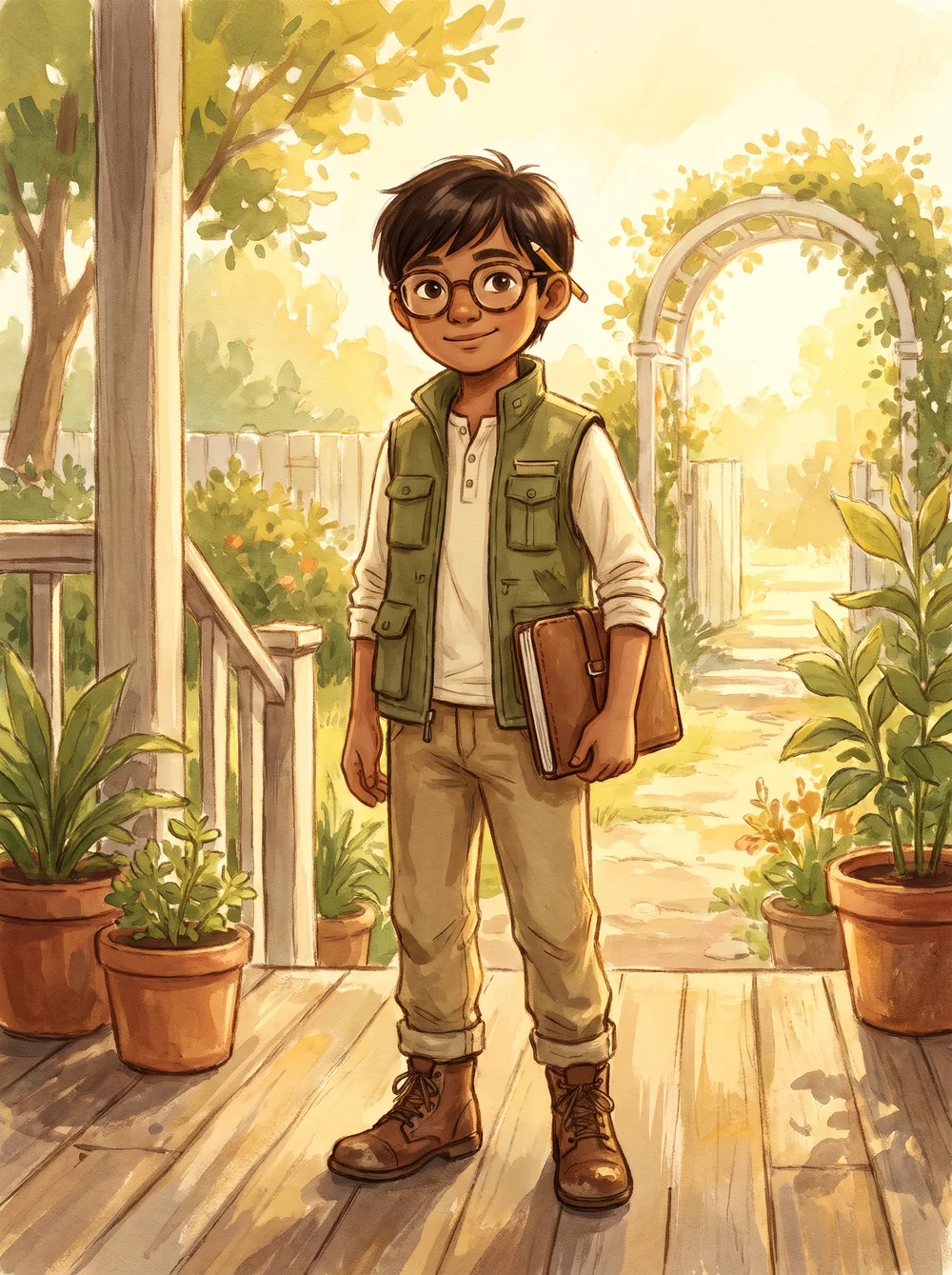
Toby heard a hum with nobody there. The sound was coming from a ruler.
Lesson
Toby heard a hum with nobody there. The sound was coming from a ruler.
Toby was sitting at his desk when he heard it. A low hum. It came from nowhere.
He looked around. Then he saw the ruler. It was stuck out over the edge of the desk and it was wobbling.
He had knocked it with his elbow. It had stopped humming by the time he picked it up.
Flicker tilted his head. He had heard it too.
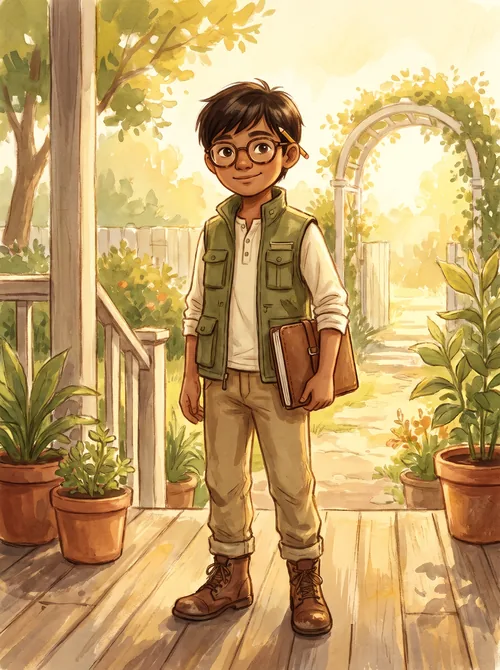 Toby, the noticer
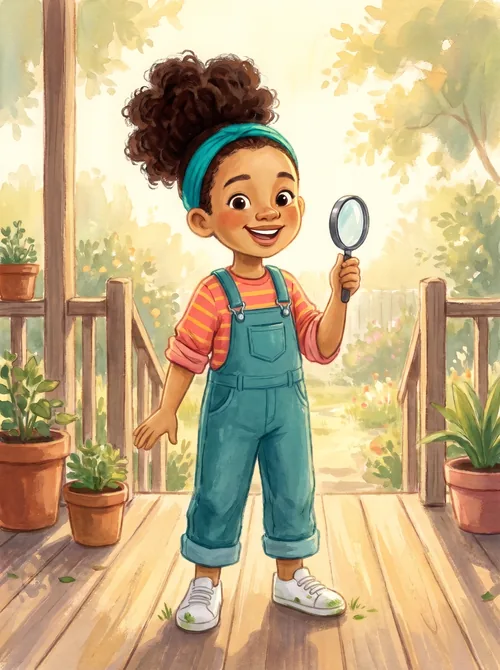 Poppy, the tryer
Poppy made her own ruler experiment. You can too. You only need a ruler and a table.
Put a finger lightly on the wobbling end. The sound stops at once.
Poppy tried a rubber band next.
She stretched it over an empty box. She plucked it. Nothing. She plucked it harder. A sad little flop.
Then she pulled the band tight and plucked again. Ping.
That is the oops. She had skipped a part of the test. A tight band and a loose band do not sound the same. So she tried both, on purpose, and wrote down what she heard.
Here is what the Fenns worked out.
A sound is a shake. When the band moves, it pushes the air next to it. That air pushes the air next to that. The shake travels through the air to your ear.
The shake is very fast. The band wobbles back and forth hundreds of times in one second. Your ear feels each little push and your brain hears a note.
Fast shakes sound high. Slow shakes sound low. A short band shakes faster than a long one. A tight band shakes faster than a loose one.
No shake means no sound. That is why a finger on the band makes it go quiet.
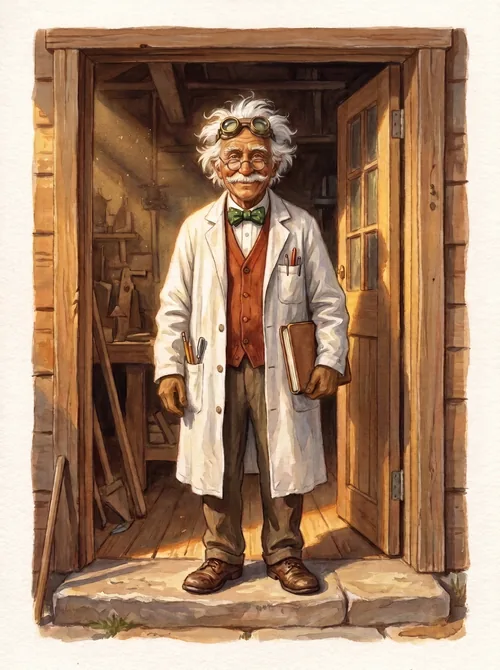 Grandpa Fenn
Every sound starts as a shake.
Fast shakes are high notes. Slow shakes are low notes.
Short and tight shakes fast. Long and loose shakes slow.
Big word for the day. Vibration. It means a quick back and forth shake.
This is a rubber band stretched over a box. Slide the length and the tightness. Then pluck it and listen.
Short and tight shakes fast. That is a high note.
Find a rubber band and a box. Make three notes. Then see if you can play a tune.
More lessons